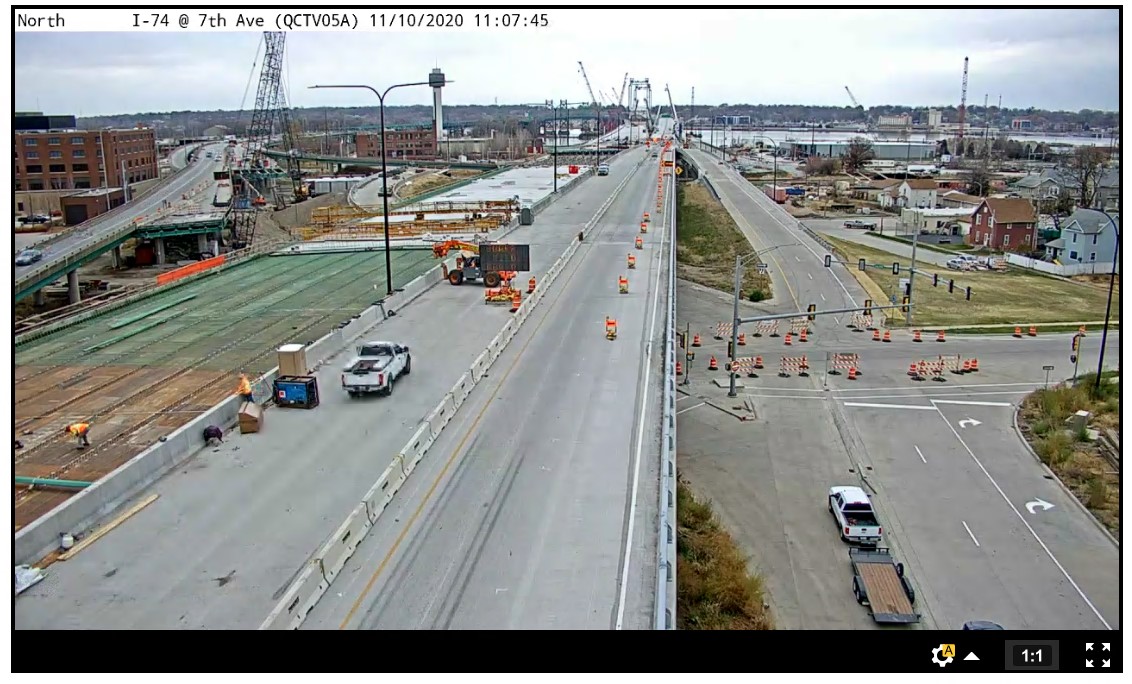
Many vehicle manufacturers offer lane-keeping assistance as part of their Automated Driver Assistance Systems (ADAS). These systems range in sophistication from basic lane departure warning to more sophisticated lane centering systems, helping improve vehicle safety on roadways. However, roadway visual cues and geometries are often significantly altered in work zones that use temporary lane delineations to accommodate work zone needs.
The Minnesota Department of Transportation (MnDOT) selected SRF’s Intelligent Transportation Systems/Connected Autonomous Vehicles (ITS/CAV) Group to assist them in exploring how different lane assistance systems perform when interacting with temporary, removed, or masked markings. In partnership with ViaSight, SRF developed an innovative evaluation approach that compared the lane assistance data captured from a control vehicle to the status of production vehicles’ factory-installed ADAS systems.
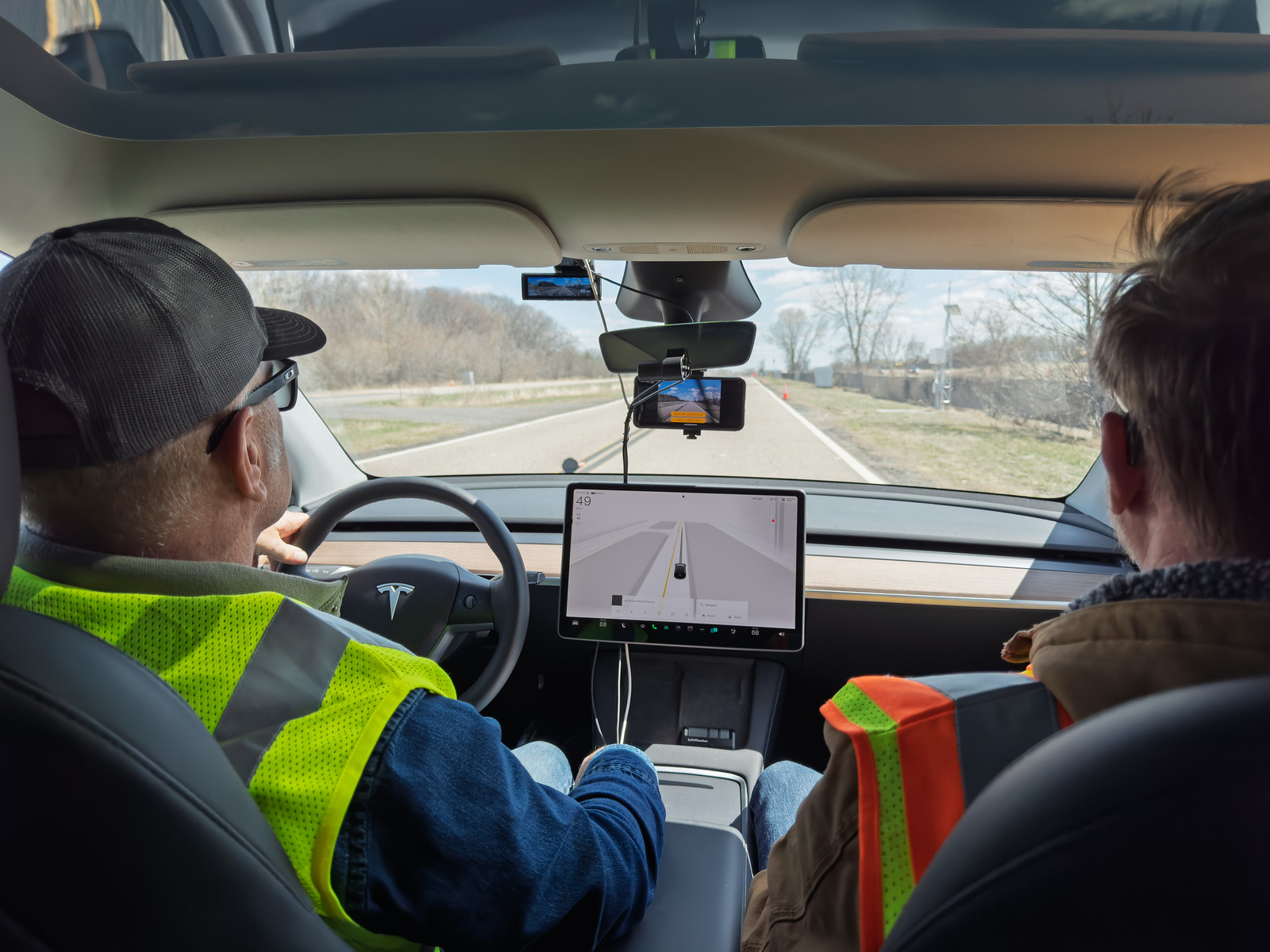
Four subject vehicles from different manufacturers were outfitted with forward-facing cameras and sensors to monitor how the lane-keeping system responded to various road conditions. Researchers were able to observe discrepancies between the real-world conditions and the ADAS systems’ interpretation of road conditions.
The project team conducted tests in two types of work zone environments:
- A controlled environment with simulated work zones using the MnDOT pavement test facility’s low volume test track
- Various live work zones throughout the greater Twin Cities area
The project findings will help MnDOT choose the best ways to mark temporary lanes and create the safest possible work zone designs.
Resource Links:
Minnesota Department of Transportation
Internal Category:
Intelligent Transportation Systems/Connected Autonomous Vehicles (ITS/CAV)
More from:
Saint Paul, MN
Minneapolis, MN