
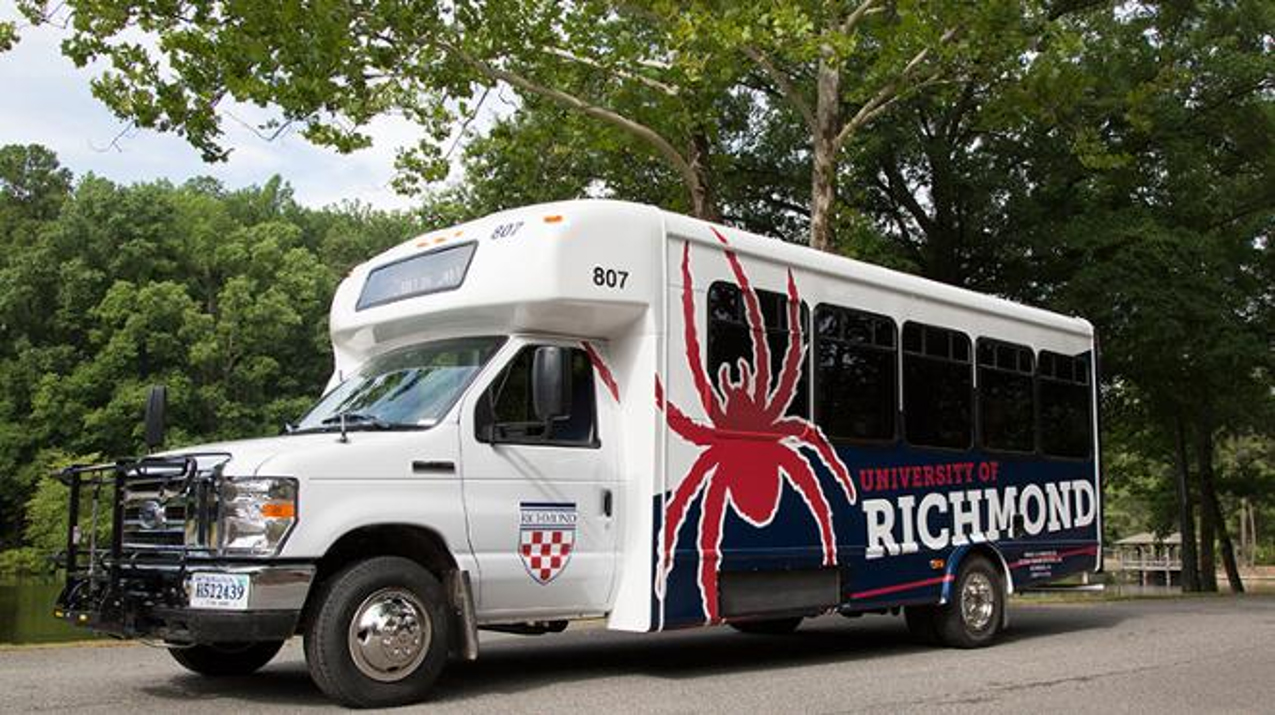
The University of Richmond completed a new transportation plan to make travel to, from, and across campus more coordinated, accessible, efficient, and responsive. Based on a review of services, travel patterns, operations, campus priorities, and user experiences, the plan provides a practical framework for organizing, delivering, and communicating transportation options. It supports campus life, advances institutional goals, and promotes thoughtful use of resources.
SRF’s Transit team worked with University of Richmond students, faculty, and staff whose perspectives shaped the plan. Their input showed how transportation supports student experience, academic opportunity, community engagement, and the University’s mission.
More Campus Transportation Options
A central focus is expanding the University’s transportation demand management (TDM) toolkit. These strategies offer convenient, reliable, sustainable travel options beyond personal vehicles:
- Improved walking and bicycling connections
- Wayfinding and bicycle parking
- Shared mobility, carpooling, and ridesharing
- Coordinated links among parking, academic buildings, residences, athletic facilities, and other destinations
Together, these strategies can simplify short trips, reduce vehicle travel, support sustainability, and connect campus while providing flexibility as technology, travel behavior, and needs evolve.
Connecting Students Beyond Campus
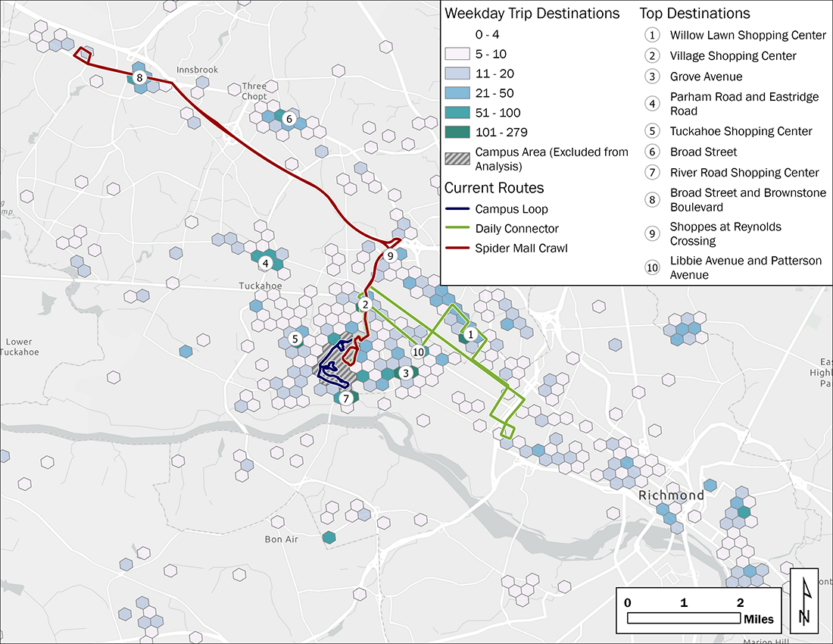
Transportation helps students participate in the Richmond region’s academic, social, cultural, and civic life. The plan recommends targeted off-campus shuttle adjustments that reflect students’ priority destinations, schedules, and experiences, including:
- Shopping
- Recreation
- Medical services
- Employment
- Entertainment and everyday destinations
By reviewing demand and adjusting routes, schedules, hours, and stops, the University can improve responsiveness while avoiding services that no longer match travel patterns.
The plan also addresses Community-Based Learning transportation. Better coordination can improve reliability, simplify scheduling, support faculty and administrators, and strengthen student access to educational and community experiences.
One Coordinated Transportation Program
The plan extends beyond vehicles and routes to help the University’s transportation resources operate as one program. Transportation services evolve with departmental needs, academic programs, events, and opportunities. This flexibility can create overlapping services, inconsistent procedures, fragmented decisions, and limited visibility into costs and performance.
The plan maps a path to clearer roles, stronger coordination, consistent policies, and centralized oversight. Aligning service management, fleet resources, vendors, data collection, and customer communication will support informed decisions and a seamless user experience.
Transportation Performance and Value
Improved administration makes transportation a strategic institutional resource. Clear service expectations, recurring reviews, stronger contract management, better data, and consistent reporting helps identify what works, what needs change, and which services provide the greatest value.
These practices can improve reliability, reduce duplication, control costs, and strengthen accountability among University departments and providers. They also help anticipate needs, evaluate mobility options, and respond to changing demand.
The goal is not just a less expensive program, but a purposeful one in which every vehicle, service, contract, and investment supports a shared mobility vision.
Accessible and Compliant Campus Transportation
Accessibility is fundamental to transportation that serves the University community. The plan evaluates vehicles, stops, pathways, communications, services, and operations through the lens of accessibility and equitable participation.
Integrating accessibility into planning will identify barriers, improve accommodations, strengthen compliance, and make transportation easier to understand and use. Consistent policies, training, documentation, vendor oversight, and monitoring will support safe, inclusive, dependable mobility.
Building on a Strong Transportation Foundation
The University already has essential components of a successful transportation program:
- Dedicated staff
- Partnerships
- Multiple resources
- Commitment to the student experience
The plan brings these strengths together deliberately.
Recommendations allow progressive implementation so the University can strengthen administration, refine services, monitor outcomes, and introduce strategies at a pace aligned with priorities and resources.
A More Connected Campus Transportation Future
This plan marks an important step toward coordinated, adaptable, accessible, and financially sustainable University of Richmond transportation. By expanding campus travel choices, aligning off-campus services with student and academic needs, strengthening Community-Based Learning transportation, and managing resources as one program, the University is positioned for continued success.
The path forward is practical: build on what works, coordinate resources, measure performance, and invest in solutions that help the University community connect, participate, and thrive.
With their fleet management leadership, Mercury Associates, the project’s prime consultant, supported a comprehensive, coordinated, resource-conscious approach. This collaboration created a strong foundation for connected, accessible, efficient, responsive transportation.
Interested in advancing mobility on your campus?
SRF helps universities turn those challenges into opportunities through data-driven planning, stakeholder engagement, and practical implementation strategies. Contact our Transit Team to explore how a coordinated transportation program can support your institution’s goals today and into the future.