
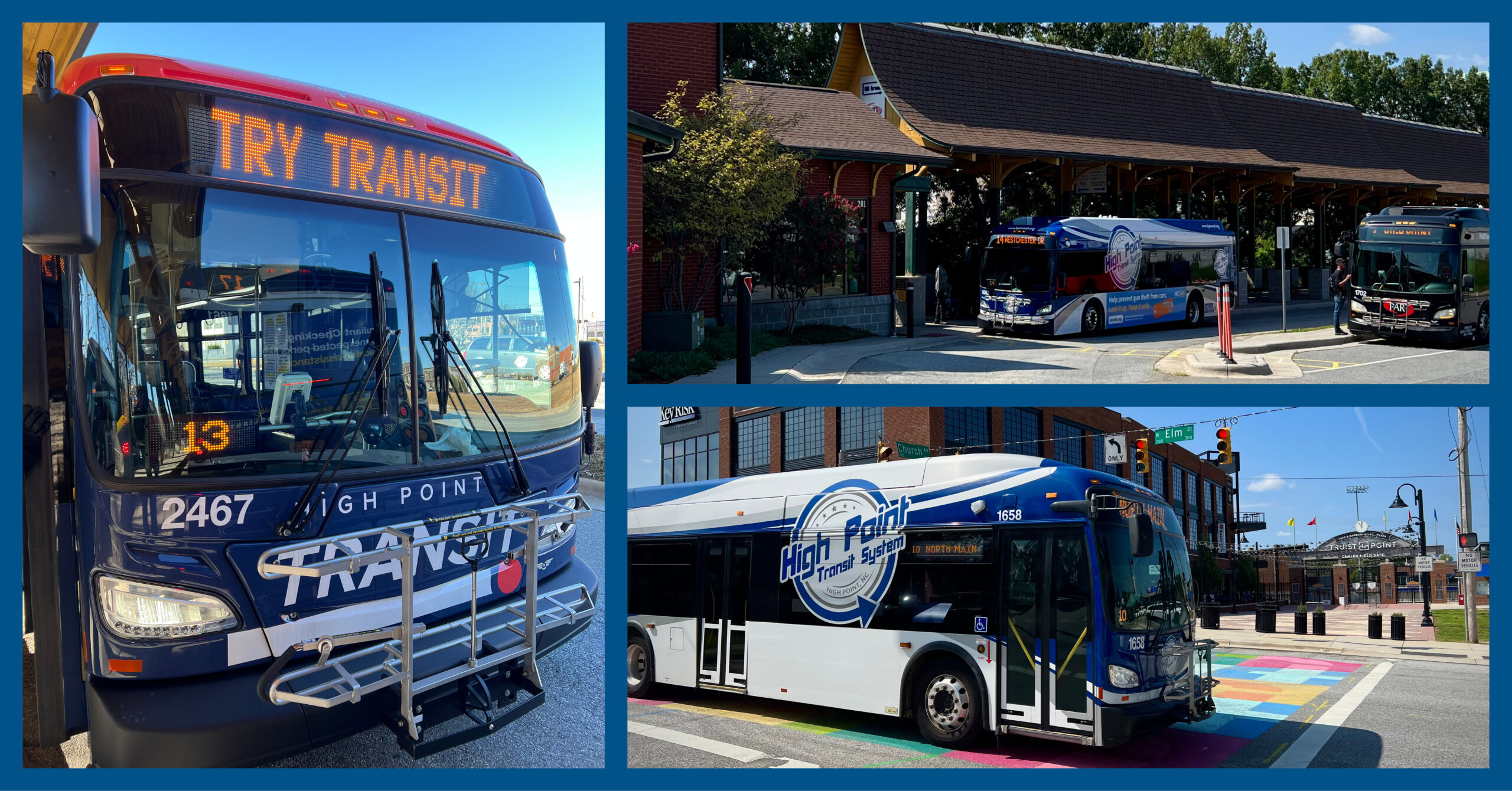
The City of High Point is ready for the next chapter of public transportation, one that is more reliable, easier to use, and better aligned with where residents live, work, learn, and shop. SRF was proud to lead the City of High Point and High Point Transit System (HPTS) through the development of a new Short Range Transit Plan (SRTP), helping translate community priorities into a practical, phased roadmap for service improvements, passenger amenities, and long-term system modernization.
A plan built for action – not a shelf.
From the outset, SRF approached the SRTP as an implementation-first effort in transit planning. The SRTP is structured to deliver near-term wins while laying the foundation for sustained investment and progress over a five- to ten-year horizon. Our transit planning team focused on recommendations that are operationally realistic, financially defensible, and clearly traceable to community needs so that each improvement builds momentum for the next.
Grounded in the realities of High Point today.
Our team began with a clear understanding of existing conditions: service supply, route and systemwide productivity, costs, and the rider experience on the ground. We evaluated how the system currently performs route-by-route and stop-by-stop, and we paired data with field observations to understand the everyday details that shape customer satisfaction including waiting environments, transfers, travel times, and reliability. This balance of quantitative and qualitative insight ensures the SRTP reflects both what the data shows and what riders feel.
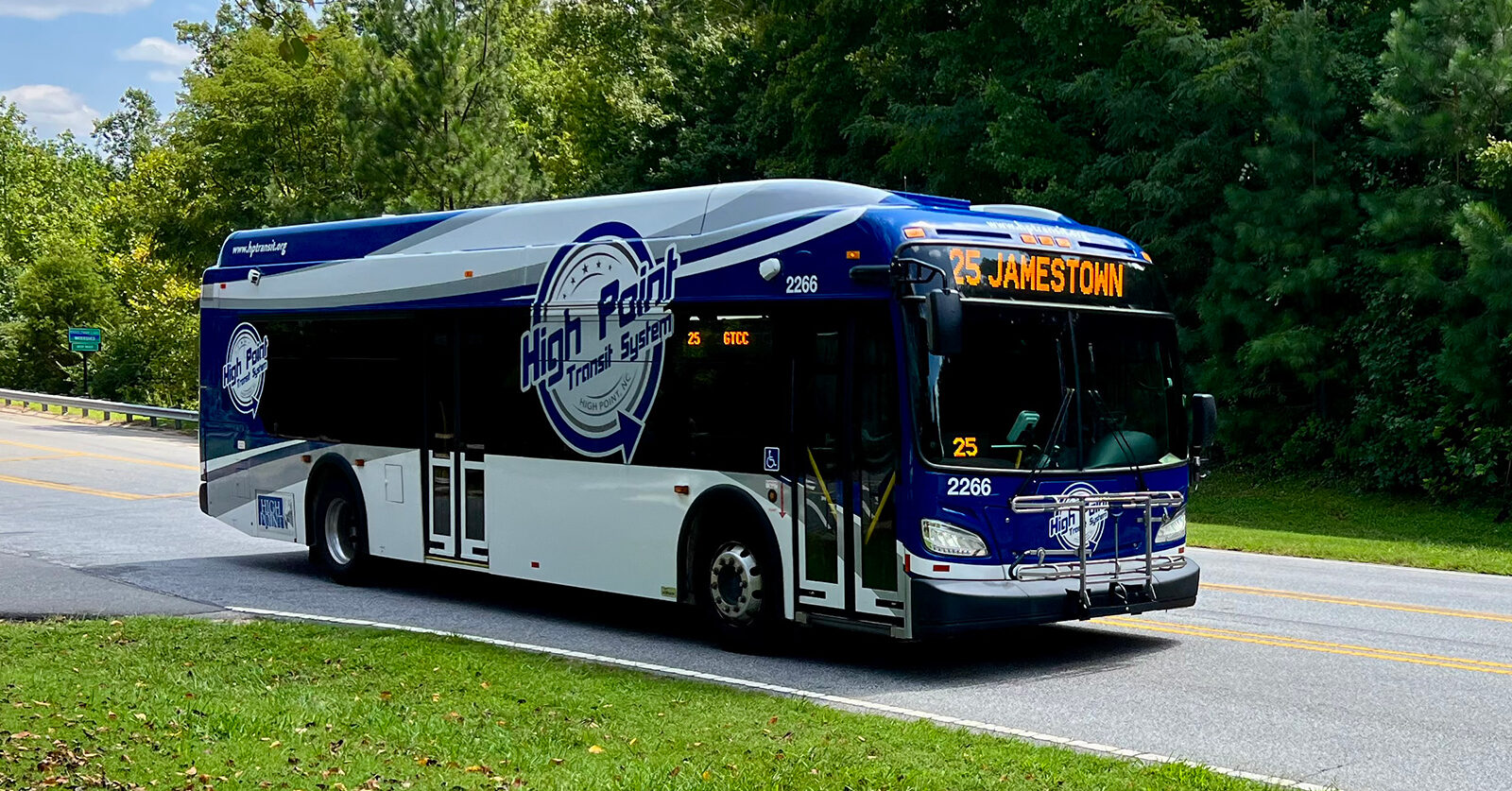
Centered on access, equity, and the places that matter most.
A strong transit network is one that connects people to opportunity. SRF’s approach emphasized access to jobs, education, healthcare, and essential services, with a deliberate focus on communities and neighborhoods that depend most on transit for mobility. We helped HPTS prioritize investments where they can improve daily life at-scale while also using transparent planning criteria to ensure passenger amenities and service upgrades are distributed fairly across the city.
A modern network that’s simpler, stronger, and easier to use.
The SRTP outlines a clear service vision: a network that is more legible for riders, more efficient for operators, and more dependable for the community. SRF’s team brought national best practices in fixed-route design, schedule coordination, and route classification supporting a system that balances ridership-focused corridors with citywide coverage. We also considered complementary mobility options, including microtransit and paratransit enhancements, to ensure High Point’s transit system meets a diverse range of travel needs. Through tiered investments and clear decision rules, the SRTP also recommends practical upgrades to shelters, benches, lighting, wayfinding, and technology that make transit more visible, more user-friendly, and more trusted.
A roadmap that helps High Point compete for funding.
SRF built the plan’s financial and implementation backbone based on realistic phasing, order-of-magnitude capital needs, and alignment with likely funding opportunities. A strong SRTP not only guides local decision-making, it also strengthens High Point’s ability to pursue state and federal grants by demonstrating readiness, accountability, and a clear strategy for delivering projects.
Partnership-driven leadership with an eye on what’s next.
The SRTP is a community plan, and the SRF team led with collaboration, working closely with City leadership, HPTS staff, partner agencies, and stakeholders to keep the work transparent and responsive. Our goal was to leave High Point with more than a document: a shared playbook, a clear set of priorities, and the confidence to implement changes step-by-step and in sync with other City plans and initiatives.
The outcome: momentum, clarity, and a transit system positioned for growth.
SRF was honored to guide High Point’s Short Range Transit Plan with optimism and accountability. With a plan that is practical, measurable, and forward-looking, High Point can build a transit network the City will be proud of for years ahead. Next stop: Tomorrow!

amore@srfconsulting.com
737.285.0828
Alec More is a transportation planner and project manager with 20 years of planning and public policy experience. He specializes in project management for transit capital infrastructure projects, systems and operations plans, coordinated land use and transportation plans, economic analysis modeling, and population demographic analyses. Alec has a detailed understanding of how to guide projects through the Federal Transit Administration’s Section 5309 Capital Investment Grant (CIG) programs including New Starts, Small Starts, and Core Capacity. He also has extensive experience with National Environmental Policy Act (NEPA) regulatory requirements and has served as a lead author and analyst for Environmental Assessments, Environmental Impact Statements, and Categorical Exclusions.
Alec has a passion for working with transit agencies to successfully advance their programs in accordance with agency priorities and to help plan for future agency initiatives.