

Successful infrastructure planning goes beyond blueprints and budgets. We believe projects should focus first and foremost on relationships, trust, and a deep understanding of the people who are directly affected. This is especially important when we partner with Tribal nations.
SRF’s planning and engineering staff is key to our Tribal collaborations. They are committed to ensuring transportation projects provide the local and regional benefits needed to help Tribal communities thrive. It’s hard to find someone who reflects this approach more fully than SRF project manager Jamie Wark.
Rooted in Community, Driven by Purpose
As a transportation and environmental planner, Jamie has dedicated more than 20 years to helping Tribal communities plan, fund, and build safer, more accessible transportation systems. His personal and cultural perspective connects him directly to northwest Minnesota, where he grew up and is an enrolled member of White Earth Nation. But his work with Tribal governments at SRF has allowed him to lead and assist with numerous project opportunities in Minnesota, the Dakotas, Montana, Wyoming, and Wisconsin.
Anytime I’m able to assist on a project with a Tribal government, it means a lot to me.
Jamie Wark
Before joining SRF, Jamie spent 10 years working with White Earth Nation, gaining valuable insight into Tribal processes and concerns. This experience helps the company better understand the wide range of transportation-related issues Tribes face.
Hear more about Jamie’s experience in the video below.
Projects That Make a Difference
For Jamie, the evolution of Minnesota Trunk Highway 200 improvement project through the White Earth Reservation was particularly significant. This 20-mile project addressed longstanding safety issues like narrow shoulders, steep ditches, and seasonal flooding. SRF led the planning, design, and environmental review efforts for the reconstruction project in close collaboration with the White Earth Tribal Government and MnDOT District 4.
A standout feature of the project is the new shared-use path around Roy Lake, a popular community gathering space. Thanks to the improvements, residents now have a safe way to walk, bike, and access the recreational area and lake.
It is a destination now that is much safer because of this project. And I’m very proud to have been part of that.
Jamie Wark
Tailored Solutions for Unique Communities
Every Tribal client has its own government, culture, priorities, and capacity. Some have robust engineering and planning programs; others do not. By taking a culturally sensitive, relationship-first approach, SRF has built long-term relationships with Tribal clients over the years. Not just for one project, but for many.
Some of our Tribal projects include:
- Long-range transportation plans (LRTPs)
- Safety action plans
- Corridor and pedestrian studies
- Roadway and bridge design
- Trail planning and construction
- Grant writing for federal and state funding
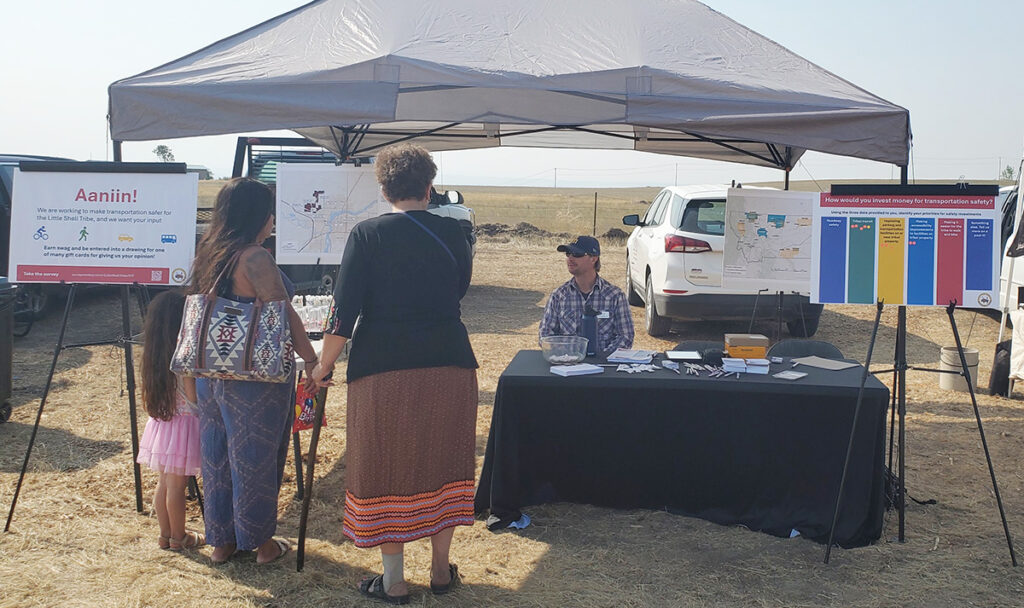
Projects that serve and intersect with Tribal lands typically require more interaction with different government agencies and careful consideration of the residents’ unique needs beyond traditional analysis and engineering solutions. SRF’s comprehensive team often serves as a “one-stop shop” for Tribal clients. By keeping most services in-house, we streamline communication and project delivery, bringing in trusted consultants when needed.
The Power of Partnership
Meaningful Tribal transportation projects require strong partnerships and effective communication between Tribal governments and outside agencies like regional, county, state, or federal departments. These partnerships also make funding applications more competitive, showing grantors that projects have broad support and regional impact.
Our partnerships create lasting value by shaping best practices for future Tribal projects. By applying these practices and sharing them with other partners, we increase the likelihood of success across future initiatives.
Focusing on the Future
Our work is most rewarding when projects create lasting benefits for the community and region, long after construction is complete. From developing a long-range transportation plan for a newly recognized Tribe to designing safe pathways for elders and children, the SRF team is dedicated to focusing on progress and making a difference.