

By the end of 2028, all 180+ communities in Minnesota’s Twin Cities region will need to submit an updated comprehensive plan to the Metropolitan Council. While this process in general is familiar to some, new requirements this year place an increased emphasis on climate planning. While many communities have been engaging in sustainability and climate action plans for several years now, for other agencies this may be the first time addressing these issues in a systematic way. In our polarized climate, addressing climate in a public planning document can certainly cause anxiety, especially for those not experienced in leading those conversations.
Below are five key things to think about to help demystify the process and build confidence as we head into “comprehensive plan season.”
1. You do NOT have to set a goal.
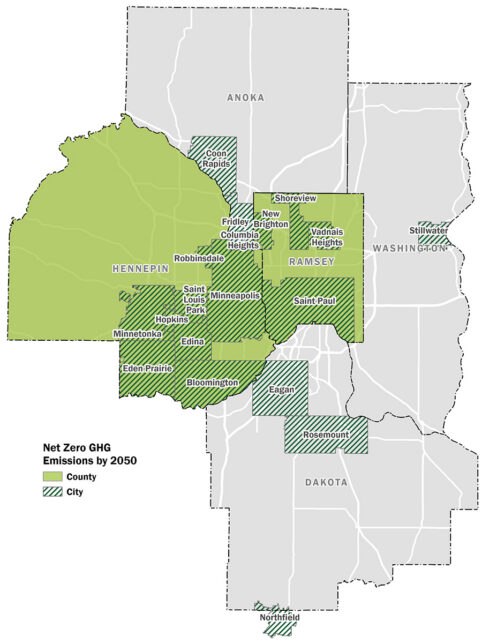
While many local communities have elected to work toward net zero emissions by 2050 (mirroring the State of Minnesota’s goal), setting a specific emissions reduction goal is not required as part of your comprehensive plan. Each community must acknowledge the State of Minnesota’s goals as part of the plan.
While setting a community-specific goal is a great way to catalyze your local community and measure progress toward greater sustainability, some communities may decide to conduct a more robust climate-specific planning effort before they are comfortable setting a local goal (which is OK!).
2. You do need to complete a GHG inventory (but it doesn’t have to be scary!).
As part of their comprehensive plan, each community will be required to conduct a greenhouse gas (GHG) inventory that includes transportation, energy use, solid waste, and agricultural emissions where applicable. This can be a daunting task for many communities, and detailed emissions inventories can be a technically and logistically challenging task.
The good news is Met Council is finalizing a tool that will greatly simplify this task by providing community-level data for the whole region. Communities that wish to use this tool can rely solely on it to fulfill the comprehensive plan requirements. Those who want to go more in depth (e.g., identify emissions directly caused by government activities) or continue using a methodology they’ve already established are free to do so.
3. Your plan needs to address both mitigation and adaptation.
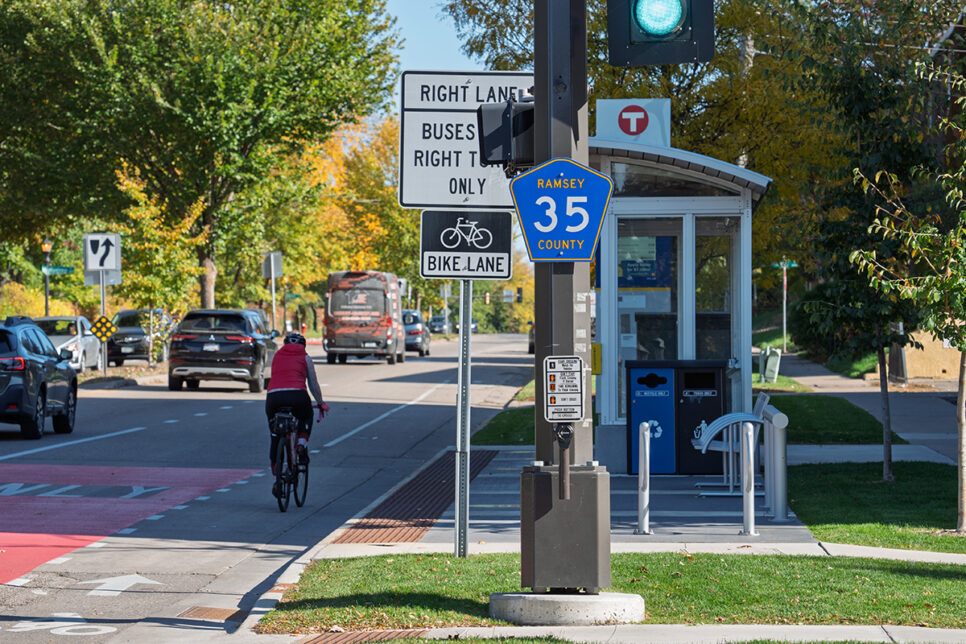
Council requirements include addressing both climate mitigation (actions that reduce greenhouse gas emission) and adaptation (actions that address current and future impacts of climate change). Addressing mitigation is handled through:
- Developing the GHG inventory
- Identifying emissions reduction strategies
- Developing a projection of the potential impact of those strategies
Adaptation involves reviewing your community’s vulnerabilities to climate hazards, including, at a minimum, extreme heat and localized flooding, and developing strategies to address those vulnerabilities. This should include risks to physical infrastructure as well as community groups and populations who may be at increased risk.
4. Build climate change in throughout the plan.
While the comprehensive plan needs to address specific topics related to climate change, there is no reason to limit the discussion to a single chapter. The impacts of climate change will be felt throughout many aspects of each community, including natural resources, recreation, and the economy. Many of the most impactful ways to reduce emissions will include transportation, housing, and land use policies.
Many GHG-reducing strategies have other community benefits. For instance, increasing access to multimodal transportation will reduce passenger vehicle emissions and also increase affordability, access to jobs and opportunities, and improve public health. For many communities, the most successful strategy may be to embed climate strategies throughout the plan, leaning heavily on communicating the cross-sector impacts to highlight how the strategies improve quality of life.
5. Don’t shy away from talking with the community.
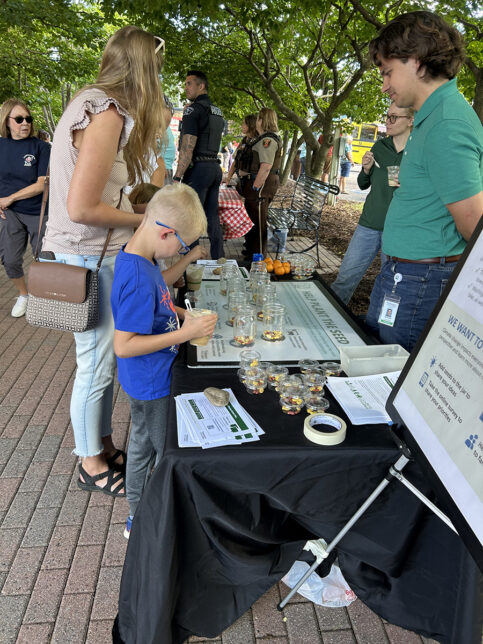
Because climate change can be polarizing, many people may hesitate to engage with the community. But as noted, climate impacts all aspects of community life, so framing the conversation in a broader way may be surprisingly productive. Aim to understand your community’s priorities (Are people most concerned about affordability? Preserving natural resources? Disaster preparedness?) and focus on ways to connect to those issues.
Use those conversations to identify ways your agency can take action in ways that resonate with the local community, and how to communicate the value of climate work. Include climate action in your broader community engagement to help people understand how it’s connected with other sectors, and don’t worry if some of the reaction is negative. Finding common ground around topics like air and water quality, affordability, and natural resources may be the key to bringing even the most hesitant community members along for the ride.
Resource Links
- State of Minnesota’s climate goals
- Met Council Greenhouse Gas Emissions Reduction Tool
- Met Council Climate Minimum Requirements
The SRF Planning Team and EcoTeam have extensive experience working with communities to develop all aspects of comprehensive plans, including expertise in local climate action planning. Contact our team to discuss how our team can help you integrate climate considerations into your upcoming plan.
Lydia Statz, AICP

763.249.6732
Lydia has eight years of multimodal transportation planning experience, leading projects ranging from single-site redevelopments to regional mobility and policy plans. She specializes in managing projects that advance sustainable transportation systems, including public transit, bicycle and pedestrian mobility, greenhouse gas reduction, and long-range planning, to assist agencies in achieving their sustainability and community goals.
Lydia is motivated by helping communities navigate the tradeoffs of high-impact planning decisions. She has extensive experience leading and facilitating policy and funding conversations with various stakeholders. As a former journalist, Lydia brings expertise in generating community buy-in by summarizing and communicating technical data to a wide variety of audiences.